
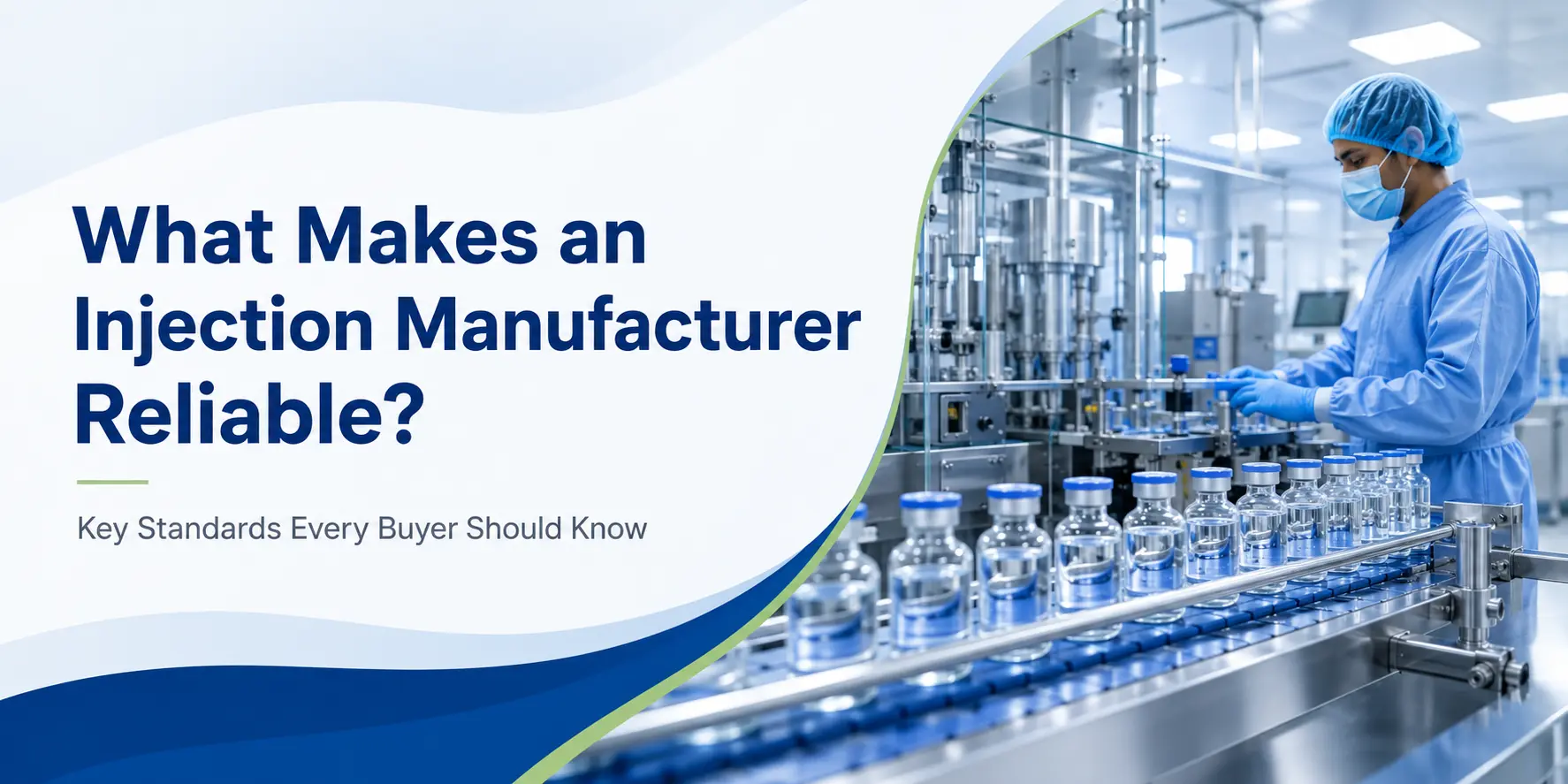
What Makes an Injection Manufacturer Reliable? Key Standards Every Buyer Should Know
Injectable medicines play a critical role in modern healthcare, supporting everything from emergency treatments and surgical procedures to infection management and chronic disease care. Because these medications are administered directly into the body, they require exceptionally high standards of quality, sterility, and regulatory compliance.
An injection manufacturer is responsible for producing sterile pharmaceutical products that meet stringent safety requirements while ensuring consistency across every batch. From facility design and aseptic processing to quality testing and packaging, each stage of manufacturing must be carefully controlled to minimize risks and maintain product integrity.
For pharmaceutical companies, distributors, and healthcare providers, selecting the right manufacturing partner is an important decision. Manufacturing capabilities, compliance standards, product quality, and export readiness all contribute to the reliability of injectable products in domestic and international markets.
This article explores the essential qualities of a modern injection manufacturer, the systems that support sterile production, and the factors businesses should consider when evaluating manufacturing partners.
What Should You Expect from an Injection Manufacturer?
A reliable injection manufacturer does much more than produce pharmaceutical products. It operates within a highly controlled environment designed to ensure patient safety, product efficacy, and regulatory compliance.
Key responsibilities include:
- Manufacturing sterile injectable formulations
- Maintaining contamination-controlled production environments
- Conducting rigorous quality assurance and testing
- Meeting national and international regulatory requirements
- Supporting packaging, documentation, and product traceability
- Ensuring a consistent supply for domestic and export markets
Modern manufacturers often produce a wide range of injectable medicines, including antibiotics, anti-inflammatory medications, anaesthetics, critical care products, and nutritional injections.
Why Does Manufacturing Infrastructure Matter?
The quality of an injectable product is closely linked to the manufacturing environment in which it is produced.
Unlike many oral dosage forms, injectable medicines require sterile processing conditions that reduce the risk of microbial contamination. This makes facility infrastructure one of the most important aspects of injectable pharmaceutical production.
Critical infrastructure elements include:
Cleanroom Environments
Cleanrooms are designed to control airborne particles and maintain sterile manufacturing conditions. These controlled environments help protect products during formulation, filling, and packaging operations.
Advanced HVAC Systems
Heating, ventilation, and air conditioning systems help regulate:
- Temperature
- Humidity
- Air pressure differentials
- Airborne particulate levels
Consistent environmental conditions support product stability and manufacturing reliability.
Controlled Material and Personnel Flow
Modern facilities separate material movement from personnel movement to reduce contamination risks and maintain operational efficiency.
How Do Injection Manufacturers Ensure Product Sterility?
Sterility is one of the most important requirements in injectable pharmaceutical manufacturing.
To maintain sterility throughout production, manufacturers implement multiple layers of control.
1. Raw Material Verification
All incoming materials undergo testing to verify identity, purity, and compliance with established specifications.
2. Aseptic Processing
Products are manufactured under carefully controlled conditions designed to prevent contamination during formulation and filling operations.
3. Environmental Monitoring
Continuous monitoring helps manufacturers maintain required environmental conditions within production areas.
Monitoring programs often include:
- Air quality assessments
- Surface monitoring
- Microbiological testing
- Temperature and humidity tracking
4. Sterility Testing
Finished products undergo validation and testing procedures before release to ensure compliance with quality standards.
What Quality Systems Should Every Injection Manufacturer Follow?
Quality management systems provide the framework for maintaining product consistency and regulatory compliance.
Leading manufacturers implement structured quality programs that include:
1. Quality Assurance
Quality assurance focuses on preventing defects through documented procedures, training programs, and process controls.
2. Quality Control
Quality control involves laboratory testing and product verification throughout the manufacturing lifecycle.
3. Documentation and Traceability
Accurate documentation supports transparency, regulatory compliance, and product traceability.
4. Continuous Improvement
Manufacturers regularly evaluate processes and performance data to identify opportunities for improvement and reduce operational risks.
What Should Buyers Look for When Choosing an Injection Manufacturer?
Selecting the right manufacturing partner requires evaluating several important factors.
1. Regulatory Compliance
Manufacturers should demonstrate compliance with applicable pharmaceutical regulations and quality standards.
2. Product Portfolio
A diverse portfolio often indicates broader manufacturing expertise and operational capabilities.
3. Export Readiness
For international distribution, manufacturers should have experience managing export documentation, packaging requirements, and country-specific regulatory expectations.
4. Manufacturing Capacity
Production capacity should support current and future demand while maintaining product quality.
5. Quality Culture
Organisations that prioritise quality across all departments are often better positioned to deliver reliable pharmaceutical products consistently.
Why Is Regulatory Compliance Essential in Injectable Manufacturing?
Regulatory compliance helps ensure that injectable medicines are produced according to established safety and quality standards.
Manufacturers must maintain compliance through:
- Process validation
- Equipment qualification
- Personnel training
- Documentation control
- Quality risk management
- Internal audits
These systems help maintain manufacturing consistency while supporting market access across different regions.
How Armein Pharmaceuticals Supports Injectable Manufacturing Excellence
Armein Pharmaceuticals is committed to delivering high-quality sterile injectable products through advanced manufacturing practices and a quality-focused culture.
With expertise across multiple therapeutic categories, including antibiotics, gastrointestinal medicines, critical care products, neurological treatments, anesthetics, and nutritional injections, the company supports healthcare markets both in India and internationally.
Its manufacturing operations emphasize:
- Controlled production environments
- Advanced HVAC systems
- Continuous monitoring programs
- Regulatory compliance
- Quality assurance-driven processes
By combining modern infrastructure with a commitment to operational excellence, Armein Pharmaceuticals contributes to the reliable supply of injectable medicines for healthcare providers and pharmaceutical partners worldwide.
Conclusion
The role of an injection manufacturer extends far beyond product production. Quality systems, sterile manufacturing environments, regulatory compliance, and reliable supply chain management all contribute to the safety and effectiveness of injectable medicines.
As demand for pharmaceutical injections continues to grow globally, selecting a manufacturing partner with proven expertise and strong quality standards becomes increasingly important. Manufacturers that invest in advanced facilities, compliance frameworks, and continuous improvement initiatives are better positioned to meet the evolving needs of healthcare markets.
To learn more about injectable pharmaceutical manufacturing, explore our related resources:
- Understanding Quality Control Protocols Within an Injection Manufacturing Company
- Grasping the Process of Sterile Injectables Manufacturing
- Challenges and Solutions in Exporting Injectable Drugs as a Pharmaceutical Exporter
- How Advanced HVAC Systems Define Modern Pharma Manufacturers
Contact Armein Pharmaceuticals to learn how our sterile injectable manufacturing capabilities support pharmaceutical businesses and healthcare systems worldwide.
Frequently Asked Questions
What does an injection manufacturer do?
An injection manufacturer produces sterile pharmaceutical products intended for administration through injection. Their responsibilities include formulation, sterile processing, quality testing, packaging, and regulatory compliance.
Why is sterility important in injectable manufacturing?
Sterility helps prevent contamination and protects patient safety. Because injectable medicines bypass many of the body’s natural defense mechanisms, maintaining sterile conditions is essential.
What certifications should an injection manufacturer maintain?
Manufacturers should comply with applicable pharmaceutical regulations and quality standards, including Good Manufacturing Practices (GMP) and other relevant regional requirements.
How do injection manufacturers ensure product quality?
Quality is maintained through raw material testing, process controls, environmental monitoring, validation activities, and finished product testing before market release.
What products are commonly produced by injection manufacturers?
Common products include antibiotics, anesthetics, anti-inflammatory medicines, critical care drugs, nutritional injections, gastrointestinal treatments, and neurological therapies.
How do pharmaceutical companies choose an injection manufacturer?
Companies typically evaluate manufacturing capabilities, quality systems, regulatory compliance, export experience, product portfolio, and supply reliability before selecting a manufacturing partner.