
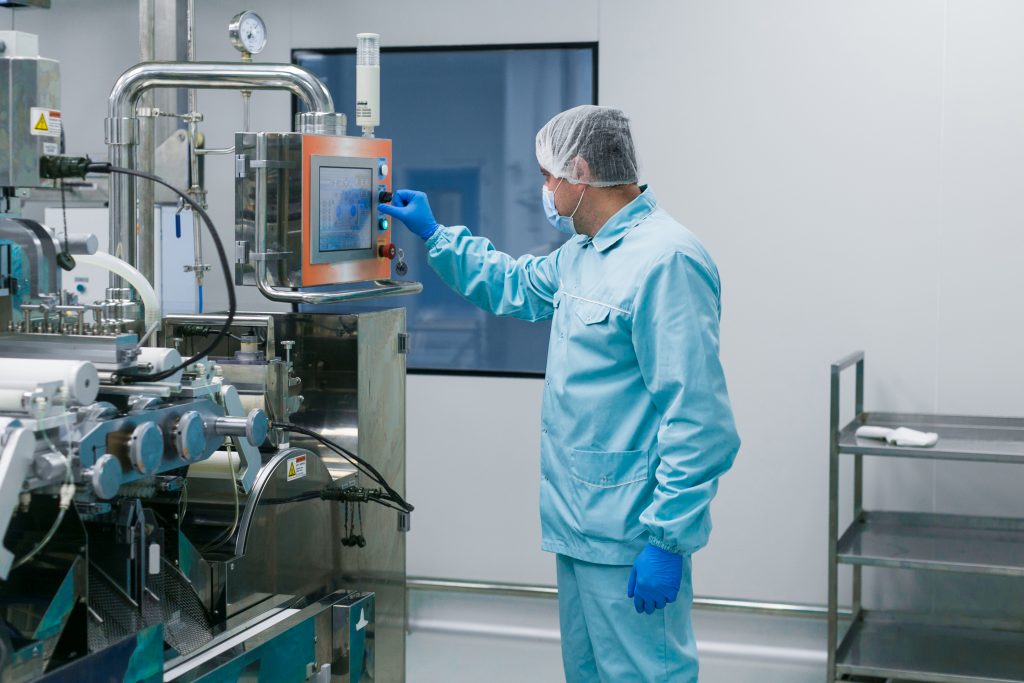
Understanding Quality Control Protocols Within an Injection Manufacturing Company
In the world of pharmaceuticals, few things are as critical as the safety and efficacy of parenteral products. Unlike oral medications, injectables bypass the body’s natural defenses, entering directly into the bloodstream or muscle tissue. This reality places an immense responsibility on every injection manufacturing company to maintain flawless standards.
For healthcare professionals, understanding the “how” behind the vial is just as important as the drug itself. Quality control isn’t just a department; it is the heartbeat of a reputable injection manufacturing company. Today, we explore the rigorous protocols that define excellence in this sector, with insights drawn from our own practices at Armein Pharmaceuticals.
The Non-Negotiable Standard: Sterility Assurance
The primary differentiator between a standard pharmaceutical facility and a specialized injection manufacturing company is the obsession with sterility. There is no margin for error. A single microscopic contaminant can have life-altering consequences for a patient.
To combat this, top-tier manufacturers employ a multi-layered defense system. This typically starts with the facility design itself. For instance, sterile injectables must be produced in controlled environments that meet global standards.
Grade A (Class 100) Manufacturing Conditions
A state-of-the-art facility, such as the one we operate at Armein Pharmaceuticals, conducts its filling and sealing processes under Grade A (Class 100) conditions. This classification ensures that the air in the critical zone contains no more than 100 particles of 0.5 microns or larger per cubic foot.
An injection manufacturing company that invests in such infrastructure is essentially building a fortress against contamination. We maintain this level of purity through:
- High-Efficiency Particulate Air (HEPA) filters.
- Unidirectional process flows to prevent cross-contamination.
- Positive pressure differentials that push air out of the cleanroom, preventing untreated air from entering.
Water and Air: The Invisible Critical Ingredients
While active pharmaceutical ingredients (APIs) get the spotlight, water and air are the silent workhorses in an injection manufacturing company.
Advanced Air Filtration
In a high-quality facility, human and material flows are strictly separated. This is a protocol you will see strictly enforced at our facility. Personnel are the biggest source of particulate matter; thus, separating their movement from raw materials is a vital protocol to maintain sterility.
Purified Water Systems
Water quality is paramount for sterile injectables. It is not enough to just filter water; it must be purified to an injectable grade. Best-in-class protocols involve:
- Double Reverse Osmosis (RO) Pass: Removing dissolved solids and impurities.
- EDI (Electrodeionization): Polishing the water to remove residual ions.
- UV Treatment: Ensuring microbial control.
- Continuous Loop Systems: Preventing water stagnation where bacteria could breed.
When evaluating an injection manufacturing company, asking about their water system design, specifically loop systems, is a quick way to gauge their technical competence.
The Role of Pharma Manufacturers in India
The global landscape of pharmaceutical production has shifted significantly over the last decade. Pharma manufacturers in India have moved beyond just being cost-effective; they are now synonymous with quality and innovation.
India supplies a significant percentage of the world’s vaccines and generic injectables. Consequently, an injection manufacturing company in India today is likely to be audited by multiple global regulatory bodies. This scrutiny has elevated the local industry standards to meet and often exceed international expectations.
Manufacturing units located in pharmaceutical hubs, like Gujarat, benefit from a rich ecosystem of skilled chemists and microbiologists. This talent pool allows an injection manufacturing company to maintain robust Quality Assurance (QA) and Regulatory Affairs (RA) departments that ensure every batch meets global compliance.
Detailed Quality Control Protocols
A professional injection manufacturing company operates on a “Quality by Design” (QbD) principle. This means quality is planned into the process, not just tested at the end. The table below breaks down the comprehensive testing framework utilized at every stage:
Production Phase | Key Tests & Checks | Core Objective |
1. Raw Material Analysis | • Identity & Purity Testing • Microbial Limit Verification • Vendor Certificate Validation | To ensure that no contaminants or sub-standard ingredients enter the facility before manufacturing begins. |
2. In-Process Monitoring | • Automated Visual Inspection • pH & Osmolality Checks • Container Integrity (Leak) Tests | To maintain chemical stability and physical integrity during the critical filling and sealing processes. |
3. Finished Product Analysis | • Sterility Testing • Endotoxin (LAL) Testing • Assay Verification | To guarantee the final patient dose is sterile, potent, and strictly matches the label claim. |
Armein Pharmaceuticals: A Guardian of Health
When discussing the ideal profile of an injection manufacturing company, we at Armein Pharmaceuticals strive to serve as a prime example of these protocols in action. The name “Armein” itself is derived from the German term Armin, meaning “guardian” or “defender.”
Founded by a team with over four decades of collective experience, we embody the shift towards high-precision manufacturing. Our facility in Bamanva, Gujarat, is a testament to modern engineering, featuring:
- Walkable false ceilings for maintenance without disrupting clean zones.
- GI powder-coated panels for easy cleaning and durability.
- Advanced HVAC systems ensuring continuous monitoring of temperature and humidity.
As a dedicated injection manufacturing company, we focus on parenteral products that are exported to over 15 countries. Our approach highlights that an injection manufacturing company in India can indeed set global benchmarks for safety with a dedicated, focused manufacturing unit.
Challenges Facing the Injection Manufacturing Industry
Running an injection manufacturing company is not without its hurdles. The sector faces constant pressure to reduce costs while increasing quality stringency.
- Supply Chain Volatility: Sourcing high-grade glass vials and rubber stoppers can be challenging.
- Regulatory Updates: Guidelines from agencies like the USFDA or WHO evolve constantly. An agile injection manufacturing company must adapt its protocols in real-time.
- Cold Chain Management: Many injectables are temperature-sensitive, requiring robust logistics post-manufacturing.
Despite these challenges, the commitment to “zero defects”, a core principle for us at Armein, remains the guiding light for the industry.
Partnering with the Right Injection Manufacturing Company
For pharmaceutical brands looking to outsource, selecting the right partner is a strategic decision. You aren’t just hiring a factory; you are hiring their protocols, their ethics, and their sterile environments.
A reliable injection manufacturing company offers more than just capacity. They offer peace of mind. They act as the custodians of your brand’s reputation and, more importantly, the patient’s life. whether you are looking for domestic production or an export partner, the technical capabilities of the injection manufacturing company must align with your long-term vision for quality.
Conclusion
The protocols within an injection manufacturing company are complex, expensive, and demanding. Yet, they are absolutely necessary. From the air pressure in the filling room to the final visual inspection of a vial, every step is a promise of safety to the patient.
As the industry evolves, companies like ours continue to lead the way, proving that with the right technology and intent, an injection manufacturing company in India can safeguard lives globally.
Frequently Asked Questions (FAQs)
What defines a "Grade A" area in an injection manufacturing company?
A Grade A (or Class 100) area is a controlled environment where the air contains very few particles (less than 100 particles of 0.5 microns per cubic foot). This is critical for the aseptic filling of sterile injectables to prevent contamination.
Why is water quality so important for an injection manufacturing company?
Water is the primary solvent in most injectables. If it contains pyrogens or bacteria, it can cause severe reactions in patients. Therefore, an injection manufacturing company must use Water for Injection (WFI) systems with double RO and UV treatment to ensure absolute purity.
How does an injection manufacturing company in India compare globally?
An injection manufacturing company in India often operates facilities that are at par with global standards. Many are inspected and approved by international regulatory bodies, offering high-quality manufacturing at competitive costs, making India a global hub for pharma.
What is the role of HVAC systems in injection manufacturing?
HVAC systems control temperature, humidity, and air pressure. In an injection manufacturing company, they create positive pressure to keep contaminants out of cleanrooms and ensure a continuous supply of filtered, sterile air.
Can an injection manufacturing company handle small batch sizes?
Yes, modern infrastructure, like ours at Armein Pharmaceuticals, offers scalability. We can handle various batch sizes, making us suitable partners for both large-scale generic production and smaller, niche injectable requirements.