
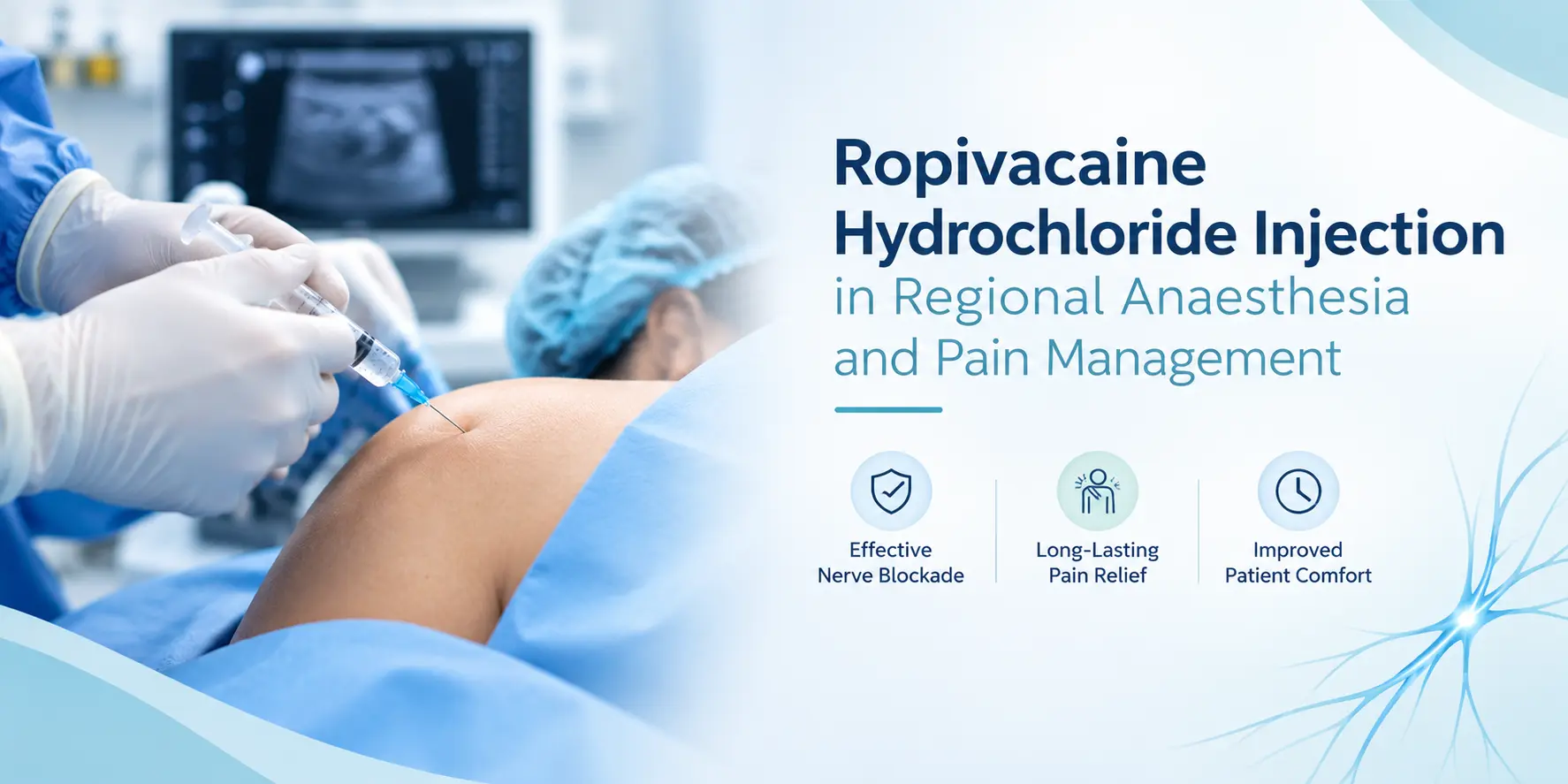
Ropivacaine Hydrochloride Injection in Regional Anaesthesia and Pain Management
Effective pain management is an important consideration throughout surgical care, from preparing patients for procedures to supporting recovery afterwards. Depending on the procedure and individual clinical requirements, healthcare professionals may use local or regional anaesthesia to manage pain in a specific area of the body.
Ropivacaine Hydrochloride Injection is an amide-type local anaesthetic used for local and regional anaesthesia in appropriate clinical settings. It is used in selected surgical procedures and acute pain management under professional supervision. Its application depends on the procedure, patient characteristics, required anaesthetic technique and approved prescribing information.
For pharmaceutical manufacturers, distributors and procurement teams, this product also represents a specialised category within the injectable medicine portfolio. Understanding its clinical role, product specifications, safety requirements and sourcing considerations can help pharmaceutical businesses make informed decisions when evaluating suppliers.
What Is Ropivacaine Hydrochloride Injection?
Ropivacaine hydrochloride is a local anaesthetic belonging to the amide group. It works by temporarily blocking the transmission of nerve signals, reducing the ability of nerves in the treated area to transmit pain sensations.
Depending on the approved product and clinical circumstances, ropivacaine may be used to produce local or regional anaesthesia during surgery and to support acute pain management.
Unlike general anaesthetic medicines that act more broadly on consciousness, local anaesthetics are used to block sensation in a particular region of the body. The precise technique depends on the clinical objective and the judgement of the anaesthesia professional.
The US prescribing information identifies ropivacaine hydrochloride injection for local or regional anaesthesia for surgery and acute pain management in adults. Approved uses and product presentations can vary by market, so the applicable product information should always be consulted.
How Does Ropivacaine Work?
Nerves transmit electrical signals that allow the body to register sensations, including pain. Local anaesthetics interfere with the movement of sodium ions through nerve cell membranes, temporarily preventing the transmission of these signals.
Ropivacaine works through this mechanism to reduce sensation in the area where it is appropriately administered.
The extent and duration of the anaesthetic effect depend on several factors, including the concentration used, the administration technique, the location of the nerve block and individual patient characteristics.
These factors are assessed by qualified healthcare professionals when selecting an appropriate anaesthetic approach. The medicine should not be administered or adjusted without the necessary clinical expertise.
Where Is Ropivacaine Used in Anaesthesia Care?
Ropivacaine has several established applications in local and regional anaesthesia, depending on the product’s authorised indications.
Regional Anaesthesia for Surgery
Regional anaesthesia involves blocking sensation in a particular region of the body. Depending on the clinical circumstances and approved product information, ropivacaine may be used for techniques such as epidural anaesthesia or major nerve blocks.
The choice of technique depends on the procedure, the intended area of anaesthesia and the patient’s clinical condition.
Local Infiltration
Local infiltration involves administering a local anaesthetic into tissue in or around the area where anaesthesia is required. Ropivacaine may be used for this purpose in appropriate circumstances.
Acute Pain Management
Ropivacaine can also be used in selected acute pain management settings, including certain postoperative applications. The method of administration and duration of treatment depend on the clinical plan and authorised product information.
These applications demonstrate why ropivacaine is relevant to specialised anaesthesia services. They do not mean that every concentration or presentation is suitable for every technique.
Why Is Ropivacaine Relevant to Postoperative Pain Management?
Pain following surgery can vary according to the procedure, the extent of tissue involvement and individual patient factors. Healthcare teams may use different approaches to manage it, including regional anaesthetic techniques where appropriate.
Local and regional anaesthesia can form part of a broader pain management plan. The suitability of a particular technique depends on the procedure, the patient’s condition and the intended clinical outcome.
Ropivacaine may be considered by healthcare professionals when a regional anaesthetic or local anaesthetic approach is appropriate.
However, postoperative pain management is not based on a single medicine. The clinical team determines the most suitable approach using professional assessment and relevant clinical guidance.
What Safety Considerations Apply to Ropivacaine?
Although ropivacaine has important applications in anaesthesia, it requires careful administration and appropriate monitoring.
Local anaesthetic toxicity can occur if excessive amounts are absorbed or if the medicine is inadvertently administered into a blood vessel. Serious cardiovascular and neurological complications are possible, making appropriate administration technique and readiness to manage emergencies essential.
Healthcare professionals should also review relevant contraindications, precautions, potential adverse reactions and interactions before use. A history of hypersensitivity to amide-type local anaesthetics is a contraindication identified in US prescribing information.
The exact precautions and adverse reactions should be reviewed in the approved prescribing information for the product being used.
Ropivacaine must be administered by appropriately qualified healthcare professionals. General online information should not be used to determine an individual patient’s dose or treatment plan.
Why Do Strength and Presentation Matter?
The strength and presentation of an injectable medicine influence how the product is identified, procured and evaluated for its intended application.
Pharmaceutical buyers should distinguish between concentration, total drug content, and container volume when reviewing product specifications.
For example, a concentration expressed as a percentage is not the same as the total quantity of medicine contained in a vial. Buyers should confirm the complete product specification rather than relying on a shortened product name.
Armein Pharmaceuticals‘ supplied product portfolio lists Ropivacaine Hydrochloride Injection USP 0.5% in 10 ml, 20 ml and 30 ml vial presentations. These details reflect the supplied portfolio and should be confirmed against current product documentation when making procurement decisions.
The appropriate presentation for clinical use depends on the authorised product information and the healthcare professional’s assessment.
What Makes Quality Important for Ropivacaine Injection?
Injectable medicines require suitable manufacturing controls and quality systems that correspond to their product specifications and dosage form.
For a local anaesthetic product, pharmaceutical quality is an important consideration alongside clinical suitability and availability. Buyers should evaluate whether the supplier can provide the documentation and product information required for their intended market.
Relevant considerations may include:
- Product identity, strength, and specifications
- Applicable quality documentation
- Manufacturing capabilities for injectable products
- Container and packaging configuration
- Batch-related documentation and traceability
- Storage and transportation requirements
- Regulatory documentation for the destination market
The precise requirements depend on the product and applicable regulations.
For a closer look at one stage of injectable production, readers can explore our existing article, Ensuring Safety A Deep Dive into Pharmaceutical Filling. It provides additional context on pharmaceutical filling and its place within injectable product manufacturing.
What Should Pharmaceutical Buyers Consider When Sourcing Ropivacaine?
Pharmaceutical importers, distributors, hospital procurement teams and other B2B buyers should assess a supplier’s suitability against their actual product and market requirements.
Product Specifications
Confirm the required strength, presentation, vial size and other relevant product details. Ensure that the supplied specification matches the purchasing requirement.
Manufacturing Capabilities
Evaluate whether the manufacturer has appropriate capabilities for the relevant injectable dosage form and product category.
Documentation and Compliance
Establish which quality, regulatory, and commercial documents are required. Import and registration requirements can differ significantly between markets.
Packaging and Labelling
Confirm the packaging configuration and labelling requirements applicable to the intended destination.
Supply Planning
Discuss anticipated order quantities, lead times, ordering frequency and supply expectations before establishing a commercial arrangement.
Communication and Traceability
Clear communication about specifications, documentation and order requirements can help reduce misunderstandings between manufacturers, importers and distributors.
A structured evaluation helps buyers consider the full supply relationship rather than making decisions based solely on product availability or price.
Ropivacaine Hydrochloride Injection in Armein Pharmaceuticals' Portfolio
Armein Pharmaceuticals focuses on pharmaceutical formulations, with particular expertise in parenteral products.
Its supplied product portfolio includes Ropivacaine Hydrochloride Injection USP 0.5% in 10 ml, 20 ml and 30 ml vial presentations.
For pharmaceutical businesses considering this product, the sourcing process should include verification of the current product specification, manufacturing capabilities, applicable documentation, destination-market requirements and commercial supply arrangements.
These checks are particularly important when evaluating injectable products intended for specialised clinical applications.
Conclusion
Ropivacaine Hydrochloride Injection has an established role in local and regional anaesthesia and selected acute pain management settings. Its appropriate use depends on the clinical procedure, patient-specific considerations, qualified administration and the approved prescribing information for the particular product.
For pharmaceutical buyers, product specifications, quality documentation, packaging, regulatory requirements and supply planning are equally important when assessing potential suppliers.
Armein Pharmaceuticals includes Ropivacaine Hydrochloride Injection USP 0.5% in its supplied parenteral product portfolio. Contact Armein Pharmaceuticals to discuss product specifications and pharmaceutical sourcing requirements.
Frequently Asked Questions
What is Ropivacaine Hydrochloride Injection?
Ropivacaine Hydrochloride Injection is an amide-type local anaesthetic used in appropriate clinical settings for local or regional anaesthesia and selected acute pain management applications.
What is Ropivacaine Injection used for?
Depending on the authorised product and clinical circumstances, ropivacaine may be used for regional anaesthetic techniques, local infiltration and selected postoperative pain management applications.
What strength of Ropivacaine Injection is listed by Armein Pharmaceuticals?
The supplied Armein product portfolio lists Ropivacaine Hydrochloride Injection USP 0.5% in 10 ml, 20 ml and 30 ml vial presentations.
Why is professional supervision important when using ropivacaine?
Incorrect administration or excessive exposure can cause serious toxicity, including neurological and cardiovascular complications. Qualified healthcare professionals must administer the medicine and provide appropriate monitoring.
What should pharmaceutical buyers check before sourcing Ropivacaine Hydrochloride Injection?
Buyers should verify the product specification, strength, presentation, manufacturing capabilities, quality and regulatory documentation, packaging requirements, destination-market compliance and supply arrangements.
Disclaimer: This article is for informational purposes only. Always consult a qualified healthcare professional before using any medication or making medical decisions.