
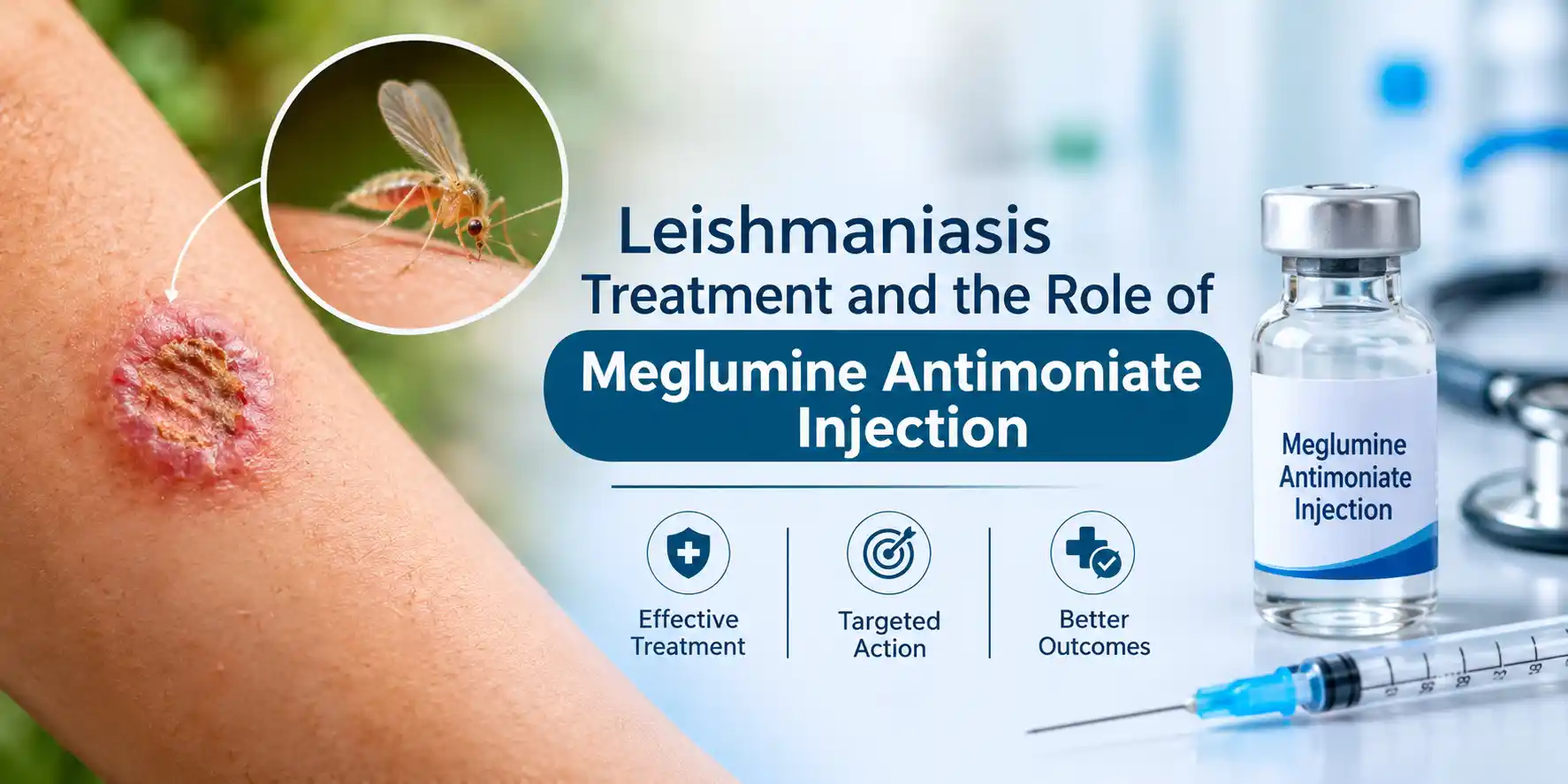
Leishmaniasis Treatment and the Role of Meglumine Antimoniate Injection
Leishmaniasis is a parasitic disease transmitted through the bites of infected female sandflies. It can affect the skin, mucous membranes, and internal organs, with the severity depending on the type of infection and the patient’s health. Leishmaniasis treatment varies according to the parasite species, geographical region, clinical presentation, and individual patient factors. Early diagnosis and appropriate medical management are important, particularly in cases involving visceral leishmaniasis.
Several medicines are used to manage different forms of the disease, including antimonial compounds, amphotericin B, miltefosine and paromomycin. Among the established injectable options, meglumine antimoniate has a recognised role in selected treatment settings.
For pharmaceutical manufacturers and healthcare procurement teams, the availability and quality of appropriate injectable medicines are also important considerations. As an injection manufacturing company in India, Armein Pharmaceuticals operates in the pharmaceutical formulations sector, with a focus on parenteral and injectable products.
Understanding Leishmaniasis and Its Different Forms
Leishmaniasis is caused by protozoan parasites belonging to the Leishmania genus. The infection is transmitted to humans through the bite of an infected female sandfly.
The disease occurs in different geographical regions, including parts of Asia, Africa, the Middle East, and Latin America. Its clinical presentation depends on the parasite species, the immune response of the affected individual, and other health-related factors.
The three principal clinical forms are cutaneous, mucosal, and visceral leishmaniasis.
1. Cutaneous Leishmaniasis
Cutaneous leishmaniasis primarily affects the skin. It commonly develops as one or more lesions, which may begin as small bumps and gradually develop into ulcers.
The lesions can appear on exposed areas of the body, including the face, arms, and legs. Some may heal naturally, while others can persist, become disfiguring, or require medical intervention.
Treatment decisions depend on the parasite species, lesion characteristics, location, number of lesions, and the possibility of further complications.
2. Mucosal Leishmaniasis
Mucosal leishmaniasis affects the mucous membranes, particularly those of the nose, mouth, and throat. It may develop alongside or after a cutaneous infection, depending on the parasite species.
The condition can cause persistent inflammation and tissue damage. If left untreated, it may lead to significant complications involving the affected structures.
Systemic treatment is generally required, with the choice of medicine determined by specialist assessment and applicable regional guidelines.
3. Visceral Leishmaniasis
Visceral leishmaniasis, also known as kala-azar, is the most severe form of the disease. It affects internal organs, particularly the spleen, liver, and bone marrow.
Common clinical features may include:
- Prolonged or recurring fever
- Weight loss and weakness
- Enlargement of the spleen and liver
- Anaemia
- Reduced blood cell counts
Visceral leishmaniasis can become life-threatening without appropriate treatment. Prompt diagnosis and medical management are essential.
How Is Leishmaniasis Diagnosed?
Accurate diagnosis is important because different forms of leishmaniasis require different treatment approaches. Clinical symptoms alone may not be sufficient to confirm the infection.
Healthcare professionals may use several diagnostic methods depending on the disease presentation.
Clinical examination
A healthcare professional evaluates symptoms, medical history, travel or residence in endemic regions, and physical findings. Skin lesions, prolonged fever, and organ enlargement may provide important diagnostic clues.
Parasitological testing
Laboratory examination of appropriate tissue samples can help identify the parasite. Depending on the clinical form, samples may be obtained from skin lesions, bone marrow, or other relevant sites.
Serological testing
Serological tests can help support the diagnosis of visceral leishmaniasis. However, their usefulness varies according to the type of disease and the patient’s immune status.
Molecular testing
Polymerase chain reaction (PCR) and other molecular techniques can help detect parasite genetic material and may assist with species identification.
The selection of diagnostic tests should follow appropriate clinical guidelines and laboratory capabilities.
Available Leishmaniasis Treatment Options
There is no single medicine that is suitable for every form of leishmaniasis. Treatment depends on the clinical presentation, parasite species, geographical location, disease severity, and patient characteristics.
The main treatment options include the following.
Pentavalent Antimonial Medicines
Pentavalent antimonial medicines are established treatments for selected forms of leishmaniasis. Two recognised compounds are meglumine antimoniate and sodium stibogluconate.
These medicines have historically been used in different endemic regions. Their suitability depends on local parasite susceptibility, clinical guidelines and patient-specific considerations.
Meglumine antimoniate can be administered through different routes depending on the indication and product formulation. It may be considered for selected cutaneous, mucosal, or visceral infections where supported by regional recommendations.
However, resistance and reduced effectiveness have become concerns in certain geographical areas. For example, pentavalent antimonials are generally not preferred for visceral leishmaniasis in India because of established resistance concerns.
Amphotericin B
Amphotericin B is an antifungal medicine that also has activity against Leishmania parasites.
Liposomal amphotericin B is an important treatment option for visceral leishmaniasis and is preferred in several clinical settings. Its use depends on the disease form, regional guidelines, patient condition, and availability.
The liposomal formulation has a different safety and administration profile from conventional amphotericin B.
Miltefosine
Miltefosine is an oral antileishmanial medicine used for selected forms of cutaneous, mucosal, and visceral leishmaniasis.
Its approved indications and effectiveness depend on the parasite species, geographical region, and patient characteristics. Pregnancy-related restrictions and other safety considerations must be reviewed before treatment.
Paromomycin
Paromomycin is an aminoglycoside antibiotic that has antileishmanial activity. It is used in selected treatment protocols, including certain combination regimens for visceral leishmaniasis.
Its availability, formulation, and recommended use differ between regions.
Selecting the Appropriate Treatment
Treatment selection should be guided by clinical specialists and current regional recommendations. The same medicine may not produce equivalent results against different Leishmania species or in different geographical settings.
The World Health Organization’s treatment recommendations were updated in July 2026 for visceral leishmaniasis and post-kala-azar dermal leishmaniasis in eastern Africa and South-East Asia. This highlights the importance of following current regional guidance rather than applying one treatment approach globally.
Understanding Meglumine Antimoniate Injection
Meglumine antimoniate is a pentavalent antimonial compound used in selected cases of leishmaniasis.
It has been an established antileishmanial medicine for decades and is included in treatment approaches for certain forms of the disease in regions where the parasite remains susceptible.
How Does Meglumine Antimoniate Work?
The precise mechanism of action of pentavalent antimonial medicines is not completely understood. However, these compounds are believed to interfere with important metabolic processes within the parasite.
Their activity may affect parasite energy metabolism and other cellular functions, contributing to the inhibition of parasite survival.
The effectiveness of treatment depends on several factors, including parasite susceptibility, the clinical form of the disease, and the patient’s response.
Clinical Applications
Meglumine antimoniate may be used in selected cases of:
- Cutaneous leishmaniasis
- Mucosal leishmaniasis
- Visceral leishmaniasis in regions where antimonial treatment remains appropriate
The route of administration and treatment duration depend on the specific clinical indication and applicable medical guidelines.
Product Presentation and Pharmaceutical Supply
For pharmaceutical buyers, understanding the product’s strength and presentation is an important part of procurement.
Armein Pharmaceuticals lists meglumine antimoniate injection in a 1.5 g/5 ml vial in its product portfolio. Buyers can review the available product information through the meglumine antimoniate injection listing on the company’s Products page.
The actual product specification, approved indication, storage conditions, and market availability should be confirmed against the relevant product documentation.
Safety Considerations During Leishmaniasis Treatment
Antileishmanial medicines require careful clinical supervision because treatment can involve significant adverse effects. The safety profile differs between medicines, formulations, and patient populations.
Potential Adverse Effects of Meglumine Antimoniate
Pentavalent antimonial medicines may cause several adverse reactions, including:
- Nausea and vomiting
- Muscle and joint pain
- Fatigue and weakness
- Elevated liver enzymes
- Changes in pancreatic enzyme levels
- Cardiac rhythm abnormalities
Cardiac, hepatic and pancreatic monitoring may be required during treatment, depending on the clinical protocol and patient risk factors.
Patient-Specific Considerations
Healthcare professionals should assess existing medical conditions and concurrent medicines before selecting an antimonial treatment.
Patients with relevant cardiac, hepatic or pancreatic conditions may require additional precautions or an alternative treatment.
Importance of Monitoring
Depending on the medicine and clinical circumstances, monitoring may include electrocardiograms, blood tests and assessment of liver, kidney and pancreatic function.
The decision to continue, adjust or change treatment should be made by the treating specialist.
Quality and Regulatory Considerations for Injectable Antileishmanial Medicines
The quality of injectable medicines is particularly important because these formulations are administered directly into the body.
For products such as meglumine antimoniate injection, appropriate manufacturing controls and product testing help establish whether the formulation meets its applicable specifications.
Important considerations include:
Active Ingredient and Strength Verification
The declared active ingredient and strength must correspond with the approved product specification. Product documentation should clearly identify the formulation and its intended presentation.
Sterility and Contamination Control
Injectable medicines require suitable manufacturing controls to minimise the risk of microbial contamination. Relevant sterility assurance requirements must be addressed through appropriate processes and testing.
Quality Control Testing
Depending on the formulation and applicable standards, quality assessments may include:
- Identification and assay of the active ingredient
- Testing for relevant impurities
- pH and physical characteristics
- Sterility testing
- Bacterial endotoxin testing, where applicable
- Particulate matter assessment, where required
Packaging and Product Integrity
The container-closure system should be appropriate for the formulation and help maintain product integrity throughout its shelf life.
Labelling should provide the information required for product identification, batch traceability, storage and handling.
For more information about Armein’s approach to applicable quality and regulatory standards, buyers can refer to the company’s Quality Assurance and Regulatory Affairs page.
Pharmaceutical Supply Opportunities Across Leishmaniasis-Endemic Regions
Leishmaniasis remains an important public health concern across several parts of the world. Its geographical distribution creates different healthcare requirements, treatment protocols, and pharmaceutical supply considerations.
Latin America
Several Latin American countries report cutaneous and mucosal leishmaniasis, with visceral leishmaniasis also present in particular areas.
Treatment approaches are influenced by local parasite species and regional guidelines. The Pan American Health Organization provides recommendations specifically for the treatment of leishmaniasis in the Americas.
Africa
Different forms of leishmaniasis occur across African regions. Visceral leishmaniasis is a significant concern in parts of eastern Africa, while cutaneous disease is also reported in several countries.
The availability of appropriate medicines and region-specific treatment protocols remains important for healthcare systems and pharmaceutical procurement networks.
Asia
Leishmaniasis occurs in parts of South and West Asia, with different disease forms and treatment requirements across countries.
In South Asia, visceral leishmaniasis has historically been associated with kala-azar. Treatment recommendations have evolved, particularly because of resistance concerns involving older antimonial therapies in India.
For businesses operating across these geographical markets, understanding local product registration, import requirements, and treatment guidelines is essential.
As a pharmaceutical exporter in India, Armein Pharmaceuticals serves international pharmaceutical markets. Product enquiries and export arrangements should be assessed according to the applicable documentation and regulatory requirements of each destination country.
Conclusion
Leishmaniasis treatment requires an individualised approach based on the clinical form of the disease, parasite species, geographical region and patient-specific factors. Although meglumine antimoniate remains an established treatment option in selected settings, other medicines such as liposomal amphotericin B, miltefosine and paromomycin also have important roles in regional treatment protocols.
For pharmaceutical procurement teams, access to appropriate injectable medicines must be supported by product specifications, quality documentation and compliance with destination-market requirements.
Armein Pharmaceuticals Pvt. Ltd. offers a portfolio of injectable pharmaceutical formulations, including meglumine antimoniate injection 1.5 g/5 ml, subject to confirmation of current availability and applicable market requirements.
For product enquiries, specifications and export-related information, contact Armein Pharmaceuticals.
Frequently Asked Questions
What is the most common treatment for leishmaniasis?
There is no single treatment for all forms. Options include pentavalent antimonials, liposomal amphotericin B, miltefosine and paromomycin, depending on the disease form, parasite species and geographical region.
What is meglumine antimoniate injection used for?
Meglumine antimoniate is an antileishmanial medicine used in selected cases of cutaneous, mucosal and visceral leishmaniasis, depending on regional treatment recommendations and parasite susceptibility.
Is leishmaniasis completely curable?
Leishmaniasis is treatable, and many patients can achieve clinical cure. Outcomes depend on the disease form, parasite species, immune status, and effectiveness of the selected treatment. Relapse can occur in some patients.
What are the three main forms of leishmaniasis?
The three principal forms are cutaneous leishmaniasis, which affects the skin; mucosal leishmaniasis, which affects mucous membranes; and visceral leishmaniasis, which affects internal organs.
Why is regional guidance important for leishmaniasis treatment?
Different Leishmania species and geographical regions can have different treatment responses and resistance patterns. Regional guidance helps healthcare professionals select appropriate medicines and treatment approaches.
What should buyers check when sourcing meglumine antimoniate injection?
status, packaging, storage requirements, and suitability for the intended destination market.
Medical disclaimer: This article is intended for informational purposes only and does not replace professional medical advice, diagnosis, or treatment. Leishmaniasis requires assessment and management by qualified healthcare professionals. The choice of medicine and treatment regimen must follow current clinical guidelines and applicable product information.