
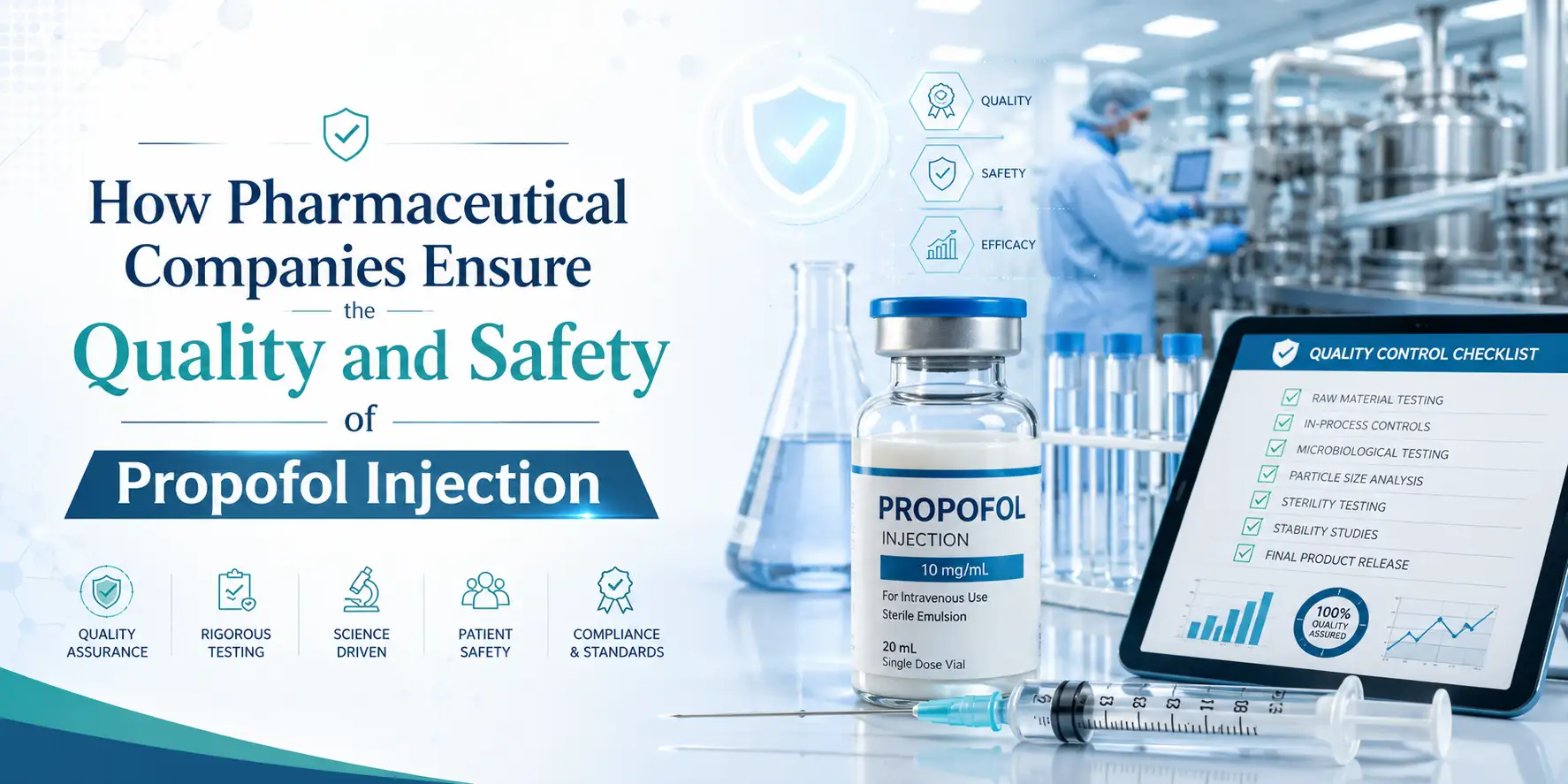
How Pharmaceutical Companies Ensure the Quality and Safety of Propofol Injection
Propofol Injection is one of the most widely used intravenous anaesthetic medicines in modern healthcare, supporting a variety of surgical and diagnostic procedures that require controlled sedation or general anaesthesia. While healthcare professionals focus on its safe administration, the quality of every vial begins much earlier-inside highly controlled pharmaceutical manufacturing facilities.
Producing a sterile injectable medicine demands precision, strict regulatory compliance, and comprehensive quality assurance at every stage of the manufacturing process. From sourcing pharmaceutical-grade raw materials to maintaining sterile environments and performing rigorous product testing, pharmaceutical companies play a vital role in ensuring that every batch consistently meets recognised quality standards. This article explores how manufacturers safeguard the quality and safety of Propofol Injection, highlighting the systems, technologies, and best practices that help deliver reliable injectable medicines to healthcare providers worldwide.
Why Is Quality So Critical for Propofol Injection?
Unlike many oral medicines, Propofol Injection is administered directly into the bloodstream. This means there is virtually no margin for contamination, formulation errors, or manufacturing inconsistencies. Every stage of production must therefore operate within tightly controlled parameters to protect patient safety and product integrity.
For pharmaceutical companies, maintaining high-quality standards is not simply a regulatory obligation-it is a continuous commitment that extends from raw material procurement to the final packaged product. Consistency in manufacturing ensures that healthcare professionals receive products that perform as intended while meeting recognised pharmacopoeial and regulatory specifications.
Some of the key reasons quality is essential include:
- Maintaining sterility throughout production.
- Ensuring accurate drug concentration in every vial.
- Protecting product stability during storage and transportation.
- Minimising manufacturing variability between production batches.
- Supporting regulatory compliance across domestic and international markets.
These measures collectively strengthen confidence in Propofol Injectable products supplied to hospitals and healthcare institutions.
How Do Pharmaceutical Companies Manufacture Safe Propofol Injection?
Producing a sterile injectable medicine requires significantly greater manufacturing control than many other pharmaceutical dosage forms. Modern pharmaceutical companies combine advanced technology with validated manufacturing procedures to ensure every batch is produced under carefully controlled conditions.
Selection of Pharmaceutical-Grade Raw Materials
The manufacturing journey begins with the careful selection of high-quality raw materials supplied by qualified vendors. Before production starts, every ingredient undergoes detailed quality evaluation to verify its identity, purity, and compliance with predefined specifications.
Incoming materials are subjected to laboratory testing before approval for manufacturing. This helps eliminate potential quality risks before they enter the production process.
Sterile Manufacturing Environment
Because Propofol Injection is a sterile injectable product, manufacturing takes place within controlled cleanroom environments designed to minimise microbial and particulate contamination.
These facilities typically include:
- HEPA-filtered air handling systems.
- Controlled temperature and humidity.
- Differential air pressure monitoring.
- Segregated personnel and material movement.
- Strict gowning procedures for manufacturing personnel.
Environmental conditions are continuously monitored to ensure they remain within validated operating limits throughout production.
Validated Injectable Manufacturing Process
Every stage of the injectable manufacturing process follows predefined Standard Operating Procedures (SOPs) developed to achieve consistent product quality.
Manufacturing activities generally include:
- Accurate weighing of ingredients.
- Controlled mixing under validated conditions.
- Sterile filtration where applicable.
- Aseptic filling into sterile containers.
- Sealing and packaging under controlled conditions.
Each step is documented to ensure complete traceability and compliance with quality management requirements.
What Quality Control Tests Are Performed Before Propofol Injection Is Released?
Quality testing is one of the most important safeguards in pharmaceutical manufacturing. Before any batch is approved for distribution, it undergoes comprehensive laboratory evaluation to verify that it meets all predefined quality specifications.
Quality Control Test | Purpose |
Sterility Testing | Confirms the product is free from microbial contamination. |
Assay Testing | Verifies the correct concentration of the active pharmaceutical ingredient. |
Particulate Matter Testing | Detects visible and microscopic particles that may affect product quality. |
pH Testing | Ensures formulation consistency and product stability. |
Stability Testing | Evaluates product performance throughout its shelf life. |
Container Closure Integrity Testing | Confirms packaging protects the sterile product during storage and transportation. |
Only after successfully meeting all quality requirements can a batch proceed to release for commercial distribution.
How Do Quality Assurance and Quality Control Work Together?
Although often mentioned together, Quality Assurance (QA) and Quality Control (QC) perform distinct but complementary roles in pharmaceutical manufacturing.
Quality Assurance focuses on preventing quality issues before they occur by establishing validated systems, documented procedures, employee training, and process monitoring.
Quality Control, on the other hand, verifies that manufactured products comply with approved specifications through laboratory testing and analytical evaluation.
Together, QA and QC help pharmaceutical companies maintain:
- Product consistency.
- Regulatory compliance.
- Manufacturing reliability.
- Batch traceability.
- Continuous process improvement.
This integrated approach enables manufacturers to deliver pharmaceutical injections that consistently meet stringent quality expectations across global healthcare markets.
How Do Regulatory Standards Safeguard the Quality of Propofol Injection?
Regulatory compliance forms the foundation of pharmaceutical manufacturing. For Propofol Injection, manufacturers must follow stringent quality standards throughout production to ensure every batch meets recognised safety, efficacy, and quality requirements. These standards are designed to minimise manufacturing risks, maintain consistency, and protect patients receiving injectable medicines.
Reliable pharmaceutical companies establish comprehensive quality management systems that govern every stage of production, from raw material procurement to final product release.
Key regulatory practices include:
Good Manufacturing Practices (GMP)
Good Manufacturing Practices (GMP) provide a structured framework for manufacturing pharmaceutical products under controlled conditions. GMP compliance helps ensure that medicines are consistently produced according to approved quality standards.
Process Validation
Manufacturing processes are validated to demonstrate that they can consistently produce Propofol Injection meeting predefined quality specifications. Validation reduces variability and supports long-term manufacturing reliability.
Equipment Qualification
Production equipment undergoes installation, operational, and performance qualification to verify that it functions accurately throughout the manufacturing process.
Documentation and Batch Traceability
Every manufacturing activity is carefully documented, creating complete traceability for each production batch. Accurate documentation supports regulatory inspections, product recalls (if required), and continuous quality improvement.
By maintaining these systems, pharmaceutical manufacturers strengthen confidence in every vial supplied to healthcare providers.
How Do Packaging and Storage Help Maintain Product Quality?
Quality does not end when manufacturing is complete. Appropriate packaging and storage play an equally important role in preserving the integrity of Propofol Injection until it reaches healthcare facilities.
Pharmaceutical companies carefully select packaging materials that protect the formulation from environmental factors such as light, contamination, and physical damage.
Important considerations include:
- Use of pharmaceutical-grade glass vials or ampoules.
- Tamper-evident sealing systems.
- Proper labelling with batch details and expiry dates.
- Controlled storage conditions.
- Ongoing stability monitoring throughout the product’s shelf life.
Maintaining suitable storage and transportation conditions helps ensure the product retains its quality from the manufacturing facility to the point of use.
Why Does Choosing the Right Pharmaceutical Manufacturer Matter?
Healthcare providers and pharmaceutical distributors depend on manufacturers that consistently deliver safe, high-quality injectable medicines. Selecting a reliable manufacturing partner goes beyond production capacity-it requires confidence in the company’s quality systems, regulatory compliance, and commitment to continuous improvement.
When evaluating an injectable manufacturer, organisations should consider:
Evaluation Criteria | Why It Matters |
Sterile manufacturing capabilities | Reduces contamination risks during production. |
Robust quality management systems | Ensures consistent product quality across batches. |
Regulatory compliance | Supports domestic and international market requirements. |
Modern manufacturing infrastructure | Enhances production efficiency and product consistency. |
Skilled technical workforce | Maintains manufacturing accuracy and process control. |
Product testing and validation | Confirms product quality before market release. |
Choosing a manufacturer with these capabilities supports long-term supply reliability and helps maintain confidence in pharmaceutical products.
How Armein Pharmaceuticals Supports Quality Injectable Manufacturing
As an emerging name among pharma manufacturers in India, Armein Pharmaceuticals is committed to delivering sterile injectable medicines that meet high standards of quality, safety, and reliability.
At Armein Pharmaceuticals, quality is embedded throughout the manufacturing process. Every production stage follows validated procedures, supported by systematic process monitoring and a robust quality management system that promotes consistency, product reliability, and compliance with recognised pharmaceutical standards.
Armein Pharmaceuticals also emphasises:
- Modern sterile manufacturing infrastructure.
- Comprehensive quality assurance and quality control practices.
- Skilled professionals with extensive pharmaceutical expertise.
- Continuous process monitoring and improvement.
- A strong commitment to supporting domestic and international healthcare markets.
By combining advanced manufacturing capabilities with a quality-focused approach, Armein Pharmaceuticals aims to provide healthcare partners with dependable Propofol Injection and other sterile injectable products.
Conclusion
The quality and safety of Propofol Injection rely on far more than the final product itself. They are the result of carefully controlled manufacturing processes, stringent quality assurance systems, validated production methods, and compliance with recognised regulatory standards. Every stage-from selecting pharmaceutical-grade raw materials to sterile manufacturing, laboratory testing, and secure packaging-contributes to delivering reliable injectable medicines for healthcare professionals.
If you are looking for a trusted partner in sterile injectable manufacturing, Armein Pharmaceuticals combines advanced infrastructure, rigorous quality systems, and a commitment to manufacturing excellence. Contact our team today to learn how we can support your pharmaceutical manufacturing and supply requirements.
Related Articles
- Everything You Need to Know About Propofol
- Understanding Quality Control Protocols Within an Injection Manufacturing Company
Medical Disclaimer
Disclaimer: This article is intended for informational and educational purposes only. It should not be considered medical advice, diagnosis, or treatment guidance. Propofol Injection must only be administered by qualified healthcare professionals in appropriate clinical settings. Always consult a registered medical practitioner or healthcare professional before making any decisions regarding the use of this medicine.
Frequently Asked Questions
What is Propofol Injection used for?
Propofol Injection is an intravenous anaesthetic commonly used by qualified healthcare professionals to induce and maintain general anaesthesia or sedation during certain medical and surgical procedures.
Why is sterility important in Propofol Injection manufacturing?
Because Propofol Injection is administered directly into the bloodstream, sterile manufacturing helps minimise the risk of microbial contamination and supports product safety.
How do pharmaceutical companies ensure the quality of Propofol Injection?
They implement comprehensive quality management systems that include raw material testing, validated manufacturing processes, environmental monitoring, laboratory testing, and regulatory compliance throughout production.
What quality tests are performed before Propofol Injection is released?
Manufacturers typically perform sterility testing, assay testing, particulate matter analysis, pH evaluation, stability studies, and container closure integrity testing before approving a batch for distribution.
What should healthcare organisations consider when selecting an injectable manufacturer?
They should evaluate manufacturing infrastructure, sterile production capabilities, quality assurance systems, regulatory compliance, technical expertise, and consistent product quality.
Why is regulatory compliance essential for injectable medicines?
Regulatory compliance helps ensure injectable medicines are manufactured under controlled conditions, meet recognised quality standards, and maintain consistency, safety, and traceability throughout the product lifecycle.